Cómo una línea de producción de bloques de hormigón totalmente automatizada logra una mayor producción con menos operarios: un análisis del sistema QT12.
May 18, 2026
La fabricación de bloques de hormigón La industria se ha caracterizado tradicionalmente por procesos que requieren mucha mano de obra, una producción inconsistente y cuellos de botella operativos que limitan la escalabilidad. Hoy en día, impulsados por la rápida urbanización, el desarrollo de infraestructuras y el aumento de los costes laborales, los fabricantes de todo el mundo están acelerando su transición hacia líneas de producción totalmente automatizadas.
En el centro de esta transformación se encuentra una pregunta fundamental: ¿Cómo se puede? una línea de producción de bloques de hormigón ¿Aumentar la producción y reducir la mano de obra simultáneamente? La respuesta no reside en una sola actualización, sino en un enfoque de automatización a nivel de sistema que elimine los cuellos de botella manuales, estandarice la calidad y optimice cada paso, desde la dosificación de la materia prima hasta el apilamiento de los palés terminados.
Este artículo examina cómo la máquina de fabricación de bloques totalmente automática QT12, un modelo ampliamente adoptado en la industria del encofrado de hormigón, permite a los fabricantes lograr precisamente este doble objetivo, respaldado por ejemplos operativos reales.
---
La ventaja de la automatización: de la dependencia manual a la producción sincronizada.
El desafío laboral tradicional
En un sistema de producción convencional, ya sea manual o semiautomático, se requieren varios operarios para realizar distintas tareas: Alimentación de materia prima, control de la mezcladora, operación del molde, desmoldeo de bloques, transporte con montacargas al patio de curado, apilamiento e inspección de calidad. Cada punto de contacto manual introduce no solo costes laborales, sino también variabilidad: densidad de bloques inconsistente, roturas durante la manipulación y retrasos en la producción debido a la fatiga del operario.
Los estudios realizados en la industria de bloques y adoquines han demostrado que los procesos tradicionales que implican el apilamiento manual, la formación de cubos y el envío crean cuellos de botella en el procesamiento, ralentizan los ciclos de producción, aumentan las roturas, provocan un embalaje inconsistente y reducen la eficiencia general de la planta.
Cómo la automatización transforma la ecuación
Una línea de producción de bloques totalmente automatizada reemplaza estos pasos manuales fragmentados con un flujo de trabajo sincronizado y basado en tecnología. Los controladores lógicos programables (PLC) gestionan toda la secuencia de producción, recibiendo señales en tiempo real de los sensores y enviando comandos precisos a los actuadores, cilindros hidráulicos y variadores de frecuencia. El resultado es un sistema de circuito cerrado donde la máquina se autorregula, asegurando que cada bloque en cada ciclo cumpla con las especificaciones exactas.
Con la automatización completa, se minimiza la intervención del operario, se reduce el riesgo de errores humanos y se logra la máxima utilización de la capacidad de producción. El proceso posterior —recoger los bloques terminados, formar cubos estandarizados, apilarlos con precisión y prepararlos para su envío— se transforma de un trabajo manual dependiente de la mano de obra en un ciclo sincronizado y de alta eficiencia.
---
El sistema QT12: Ingeniería diseñada para ofrecer rendimiento y eficiencia.
La máquina automática para fabricar bloques QT12-15 incorpora los principios de ingeniería que hacen que la automatización sea eficaz en entornos de producción exigentes.
Especificaciones técnicas clave
Especificación de parámetros
Dimensiones generales: 9350 × 2520 × 2950 mm
Tamaño del palé: 1400 × 900 mm
Ciclo de moldeo: 15-20 segundos
Potencia total: 56,2 kW
Fuerza de vibración 100–130 kN
Masa total 12 toneladas
Método de desmoldeo hidráulico
Consumo general de agua: 12 toneladas/día
Superficie de fábrica requerida: aproximadamente 1200 m²
Fuente: Especificaciones técnicas de la máquina automática para fabricar bloques QT12-15.
Puntos de referencia de capacidad de producción
La QT12 demuestra una capacidad de producción excepcional. Para bloques huecos de 400 × 200 × 200 mm, la máquina puede producir 12 bloques por palé, alcanzando aproximadamente 2160 bloques por hora y entre 17 280 y 19 440 bloques por turno de 8 horas, según la optimización del tiempo de ciclo. Para diferentes tipos de productos, la capacidad de producción oscila entre 17 300 y 124 800 piezas por jornada de 8 horas. Estos niveles de producción se mantienen de forma constante turno tras turno, a diferencia de las operaciones manuales, donde la productividad fluctúa con la fatiga de los operarios.
Funciones de automatización que generan resultados
El sistema QT12 integra varias funciones de automatización avanzadas que contribuyen directamente a la ecuación de "mayor producción, menos operarios":
1. Control inteligente basado en PLC. Todo el proceso de producción utiliza un sistema de control PLC con interfaz hombre-máquina (HMI), lo que facilita el análisis de las señales del sistema, el diagnóstico de fallos y la configuración de parámetros. Los operarios pueden supervisar y ajustar los parámetros de producción desde un panel de control central, eliminando la necesidad de intervención manual en cada estación.
2. Sistema de vibración de alto rendimiento. La presión de flujo controlada por computadora del sistema hidráulico permite una vibración síncrona vertical con conversión de frecuencia y frenado. Esto produce una mayor densidad de bloques, utilizando menos cemento y reduciendo las tasas de rechazo, lo que mejora directamente el rendimiento por unidad de material.
3. Sistema de alimentación automatizado. El sistema de tela adopta una unidad de alimentación rotativa reticular de malla semicerrada que fuerza el material hacia los moldes de manera uniforme y constante, lo que garantiza una resistencia uniforme del producto en cada ciclo.
4. Carga y desmoldeo hidráulicos. Gracias a su unidad de carga hidráulica especializada, la QT12 permite una producción masiva y automatizada, ahorrando una cantidad considerable de mano de obra, espacio de mantenimiento y capital operativo. El método de desmoldeo hidráulico proporciona una liberación uniforme sin dañar los bloques, un problema común en el desmoldeo manual.
5. Monitoreo y diagnóstico remoto. El sistema informático incluye capacidad de diagnóstico de fallas. Con un sistema de control remoto, los operadores pueden monitorear, controlar y diagnosticar toda la planta desde una sola ubicación. Esto reduce la necesidad de personal distribuido y permite una resolución de problemas más rápida cuando surgen inconvenientes.
---
La transformación operativa: De muchas manos a menos operadores
Reducción de mano de obra en el mundo real
La transición de operaciones manuales o semiautomáticas convencionales a una línea de producción QT12 totalmente automática genera un ahorro considerable en mano de obra. Mientras que una línea de producción de bloques totalmente automática de grado industrial generalmente requiere solo de tres a cinco trabajadores para la supervisión, el control de calidad y el mantenimiento, una operación manual de capacidad comparable podría requerir un equipo de quince a veinte trabajadores para realizar las mismas tareas.
La reducción de mano de obra no se limita al número de empleados. En sistemas totalmente automáticos de circuito cerrado, se puede prescindir por completo del operario de la carretilla elevadora para el transporte de bloques húmedos, ya que los sistemas de transferencia automatizados trasladan los palés directamente a las cámaras de curado. Una línea de producción de bloques totalmente automática de circuito cerrado puede funcionar con tan solo dos o tres operarios: un operador de sala de control y un inspector. No se requiere operario de carretilla elevadora para el transporte de bloques húmedos: un operario menos por turno, sin que la fatiga del conductor limite la velocidad de producción.
Un ejemplo real: El proyecto Jiangxi Ji'an
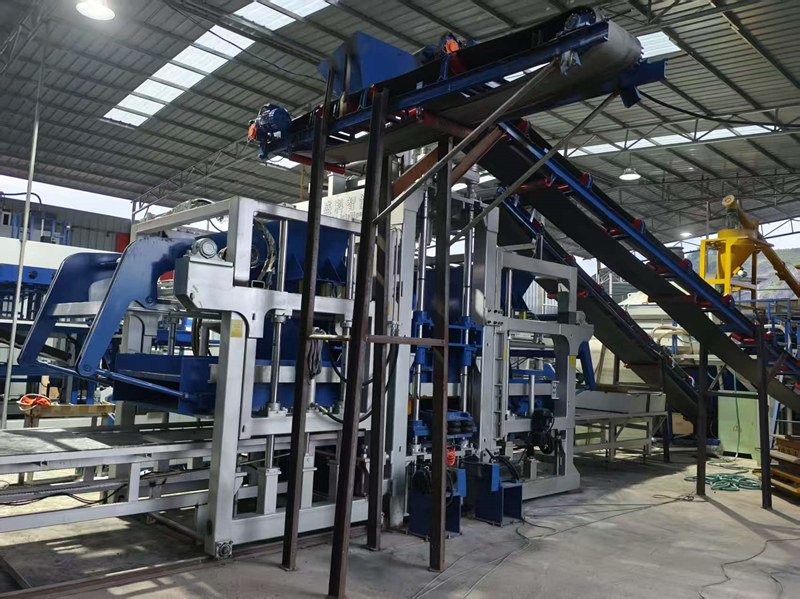
En una instalación reciente en Ji'an, provincia de Jiangxi, Quanzhou Senko Intelligent Equipment Manufacturing Co., Ltd. entregó una línea de producción de bloques totalmente automática basada en QT12. Antes de la actualización, la operación dependía de flujos de trabajo convencionales con múltiples estaciones manuales. Después de la puesta en marcha, la línea de producción QT12 totalmente automatizada El sistema procesa las materias primas hasta convertirlas en bloques paletizados con una mínima intervención humana. El cliente ahora opera la línea totalmente automatizada con solo tres operarios por turno, lo que supone una reducción sustancial respecto a la plantilla anterior. Este es precisamente el objetivo de "mayor producción con menos operarios" que se buscaba con el diseño del proyecto.
Cómo se acumulan los ahorros
Aspecto Manual / Semiautomático Totalmente Automático (QT12)
Operadores por turno: 7–8 2–3
Producción diaria (8 h) Variable, dependiente del operador Constante 17.000–124.800 piezas
Rotura por manipulación manual Moderada Casi nula (transferencia automatizada)
Consistencia de calidad Depende de la habilidad del operador Bloque idéntico a bloque
Tiempo de inactividad por cambio de turno: sustancial. Mínimo (retirada de recetas del PLC).
Riesgo de lesiones laborales: Mayor (levantamiento, apilamiento) Bajo (manipulación automatizada)
Según datos del sector, una planta de dosificación automatizada integrada con una línea de producción de bloques de hormigón puede reducir los costes laborales hasta en un 40%, al tiempo que ofrece una mezcla con mínima variación, lo que permite ajustar con precisión los requisitos de resistencia y ahorrar cemento en cada bloque.
---
Aspectos económicos: Retorno de la inversión y beneficios a largo plazo
Ganancias cuantificables
El cambio hacia la automatización genera beneficios en múltiples sectores:
Reducción de costes laborales. Con 3 a 5 operarios en lugar de 15 a 20, el ahorro anual en salarios puede superar a menudo el precio de compra inicial de la maquinaria en un periodo de cinco a diez años.
Mayor producción diaria real. Una línea totalmente automática suele alcanzar una producción diaria real entre un 15 % y un 30 % superior a la de los sistemas de circuito abierto, debido a la eliminación de las limitaciones de velocidad de las carretillas elevadoras, la fatiga del conductor y los daños causados por la humedad en los bloques.
Menores costos operativos por bloque. Mayor densidad de bloques significa menor consumo de cemento por unidad. Menor rotura significa mayor producción comercializable con la misma cantidad de materia prima. El control automatizado del curado permite ciclos de producción más rápidos y más lotes por día.
Se reducen los residuos y las repeticiones de trabajo. El consumo de material se calcula con precisión, lo que elimina el costoso uso excesivo y garantiza una mezcla uniforme en cada ocasión.
Mayor seguridad en el lugar de trabajo. Al reducirse las tareas de manipulación manual (apilamiento, levantamiento, traslado), el riesgo de lesiones laborales disminuye significativamente. Esto se traduce en primas de seguro más bajas y menos interrupciones en la producción.
Horizonte de retorno de la inversión. Para operaciones de mediana a gran escala, el retorno de la inversión de una línea de producción de bloques totalmente automatizada suele recuperarse en un plazo de 1 a 3 años. En operaciones bien gestionadas y con condiciones de mercado favorables, algunas plantas alcanzan el retorno de la inversión en un plazo de 6 a 12 meses.
La ventaja competitiva
Más allá del ahorro directo de costes, la automatización ofrece ventajas estratégicas cada vez más importantes en el mercado actual de materiales de construcción. Las líneas automatizadas pueden cambiar rápidamente entre diferentes tipos de productos recuperando fórmulas almacenadas —desde bloques huecos hasta adoquines macizos y ladrillos permeables— sin necesidad de realizar cambios manuales en el hardware. Esta versatilidad permite a los fabricantes responder a la demanda cambiante sin costosos tiempos de inactividad.
Además, a medida que las prácticas de construcción sostenible se consolidan a nivel mundial, las máquinas automatizadas para la fabricación de bloques favorecen la producción sostenible al optimizar el uso de materias primas, generar menos residuos y consumir menos energía por unidad de producción. Esto posiciona a las plantas automatizadas de manera ventajosa para acceder a incentivos gubernamentales y programas de certificación de edificios sostenibles.
---
Por qué "Hacer más con menos" es más importante que nunca
El global máquinas automáticas para fabricar bloques El mercado está creciendo con fuerza, pasando de 1.610 millones de dólares en 2025 a una proyección de 2.400 millones de dólares para 2030. Las principales tendencias que impulsan este crecimiento incluyen la producción de bloques optimizada por IA, Líneas de producción totalmente automatizadas, sistemas robóticos de manipulación de materiales y plataformas de monitorización de la producción basadas en datos.
Para los fabricantes, la cuestión ya no es si automatizar, sino con qué rapidez y con qué sistema. El fabricante que siga dependiendo de procesos manuales estará en desventaja competitiva en cuanto a precios, consistencia de la calidad y capacidad de producción.
El sistema QT12 demuestra que la producción de bloques totalmente automatizada no es una utopía, sino una realidad actual. Gracias a su ingeniería probada, el ahorro de mano de obra documentado y una producción escalable que abarca desde miles hasta más de cien mil unidades diarias, ofrece una clara vía para superar la dependencia de la mano de obra y alcanzar la eficiencia operativa.
---
Conclusión: Una plantilla para la planta automatizada
El objetivo de una línea de producción de bloques de hormigón totalmente automatizada es sencillo: un sistema estable y automatizado que reduzca el error humano a la vez que maximiza la productividad, la calidad y la rentabilidad. La QT12 lo consigue mediante una arquitectura integrada de control basado en PLC, vibración de alto rendimiento, desmoldeo hidráulico, alimentación automatizada y monitorización remota, todo ello funcionando en perfecta sincronía.
Para el cliente de Ji'an, Jiangxi, el resultado ha sido tangible: mayor producción diaria, menores costos unitarios y menos operarios en la planta de producción. La reducción de la manipulación manual también ha mejorado la seguridad laboral y disminuido las roturas, beneficios que van más allá del ahorro directo en mano de obra.
A medida que los costos laborales continúan aumentando a nivel mundial y la demanda de materiales de construcción se acelera, la automatización total se vuelve más atractiva con cada trimestre que pasa. Los fabricantes que actúen ahora para implementar líneas de producción totalmente automatizadas basadas en QT12 serán los mejor posicionados para captar cuota de mercado, controlar costos y escalar de manera eficiente en los próximos años.
Acerca de Quanzhou Senko Intelligent Equipment Manufacturing Co., Ltd.
Quanzhou Senko se especializa en el diseño y la fabricación. Líneas de producción totalmente automatizadas de bloques de hormigón y adoquines. Con un enfoque en la vibración controlada por servomotores, sistemas de control inteligentes y una construcción robusta, Senko ofrece soluciones integrales llave en mano a clientes en China y en los mercados internacionales.
---
Este artículo se basa en documentación técnica y estudios de caso operativos relacionados con los sistemas automáticos de fabricación de bloques de la serie QT12. Para consultas específicas sobre proyectos y datos de rendimiento adaptados a sus necesidades de producción, póngase en contacto directamente con el fabricante del equipo.